
Call this Thursday to Get 10% OFF (Maximum $100 Off)
Call this Thursday to Get 10% OFF (Maximum $100 Off)
24-Hour Emergency Electricians in Greer
Call this Thursday to Get 10% OFF (Maximum $100 Off)
Call this Thursday to Get 10% OFF (Maximum $100 Off)
24-Hour Emergency Electricians in Greer
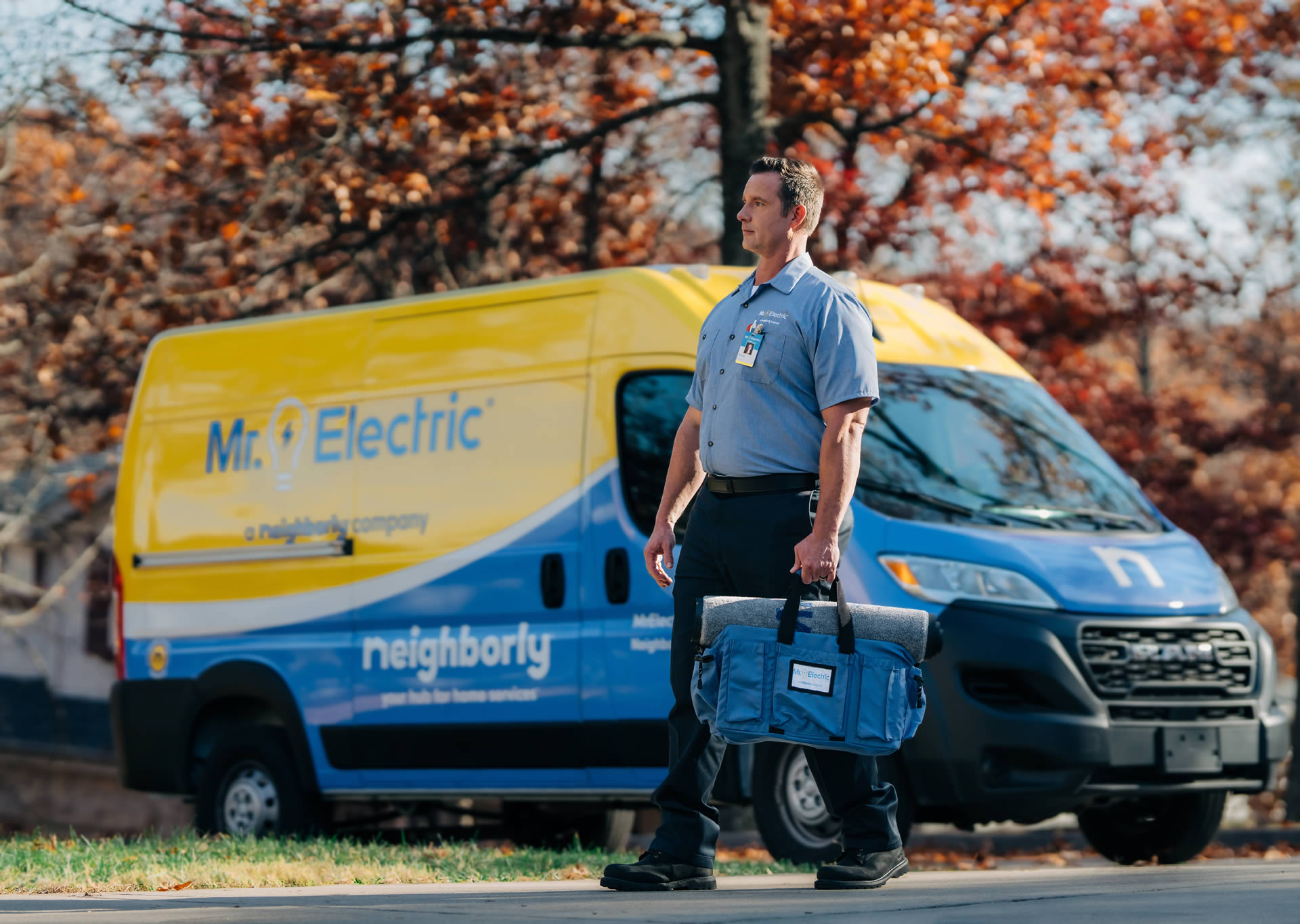
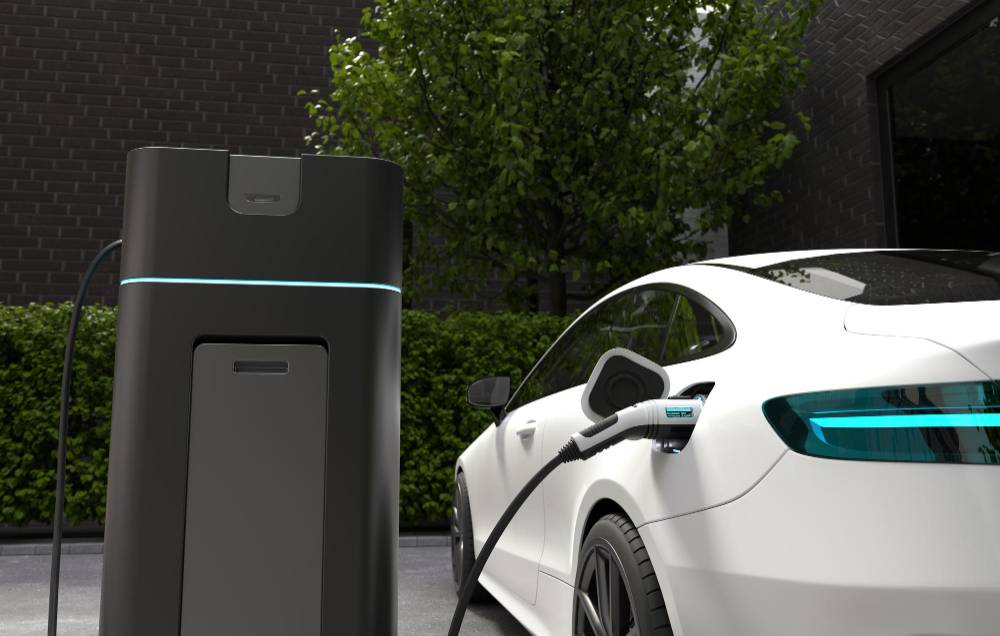
You made the leap to an electric vehicle expecting convenience and savings, but if you're still relying on public charging stations to keep your battery full, you're experiencing neither. The reality of hunting for available chargers, waiting in line behind other drivers, paying premium per-kilowatt rates, and planning your errands around charging locations gets old fast, and it's completely unnecessary for anyone with a garage or driveway. At Mr. Electric, we've helped countless EV owners finally unlock the full potential of their vehicles by installing home charging stations that transform how they think about refueling. The cost savings alone make the investment worthwhile within the first year or two for most drivers, but the convenience factor is what people mention most often after making the switch. We're going to break down exactly why relying on public stations puts you at a disadvantage, what your options are for home installation, and how to determine which setup delivers the best value for your vehicle and driving habits.
Public charging stations advertise convenience, but fast charging stations at grocery stores and shopping centers normally charge between $0.30 and $0.60 per kWh, and some premium locations push rates even higher during peak demand hours. Compare that to the average residential electricity rate, and you're paying three to four times more for every mile you add to your battery away from home. The math adds up quickly. A driver who puts 12,000 miles on their EV annually and relies exclusively on public chargers can spend $1,200 or more per year on electricity alone. That same driver charging at home drops the number to $400 or less. Public charging also eats into your time. A 30-minute stop at a DC fast charger twice a week translates to over 50 hours per year spent waiting for your car to charge. You could reclaim every one of those hours by handling all your charging overnight in your own garage.
Every electric vehicle ships with a Level 1 charger that plugs into a standard 120-volt household outlet. This basic setup adds roughly 3 to 5 miles of range per hour of charging. For drivers with short commutes who can leave their car plugged in all night, Level 1 charging might be enough. Most EV owners, however, discover that Level 1 charging can't keep up with their actual driving needs. A Level 2 charger operates on a 240-volt circuit and delivers 25 to 30 miles of range per hour. This means a completely depleted battery reaches full capacity in as little as 8 hours rather than 24 or more. Level 2 units require dedicated wiring and a proper electrical service upgrade in many homes, but the investment pays dividends every single day. Electricians in Fairmont Mills can take a look at your current panel capacity and recommend whether your home needs a subpanel or circuit upgrade to support the additional load.
The shift from public charging to home charging eliminates an entire category of daily logistics. You no longer check apps before leaving the house to locate an available station. You no longer build extra time into your schedule for unexpected waits or return to your car to find someone has unplugged you before your session finishes. Instead, you plug in when you park, and unplug when you leave. Your car charges while you sleep, eat dinner, and spend time with your family. Most utility companies offer time-of-use rate plans that discount electricity consumed during overnight hours. These plans can reduce your charging costs by 30 to 50 percent compared to standard rates. A programmable charger or your vehicle's built-in scheduling feature lets you set charging to begin automatically at 11 PM or midnight when rates drop. You wake up to a full battery every morning. What used to be a series of small inconveniences becomes genuine freedom.
Electric vehicle charger installation involves more than mounting a box on your wall and running a cable to your car. Local building codes require permits for any new 240-volt circuit, and inspectors verify that the work meets safety standards before signing off. Skipping permits to save money creates real problems down the road. Unpermitted electrical work can void your homeowner's insurance coverage if a fire or other damage occurs. It can also complicate the sale of your home when buyers or their inspectors discover undocumented modifications. Professional electricians handle the permit application, schedule required inspections, and guarantee their work meets code. They also evaluate your panel's available amperage, recommend the correct wire gauge for your installation distance, and ensure your breaker provides proper overcurrent protection. A qualified electrical service provider identifies potential issues before they become expensive surprises. Some older homes require panel upgrades to accommodate a 40 or 50 amp circuit for Level 2 charging. A professional assessment tells you exactly what your home needs and what the project will cost before any work begins.
You've already invested in an electric vehicle. Now it's time to maximize that investment with a charging solution that saves you money and returns hours to your week. Contact Mr. Electric to schedule your consultation and receive a detailed quote for your home. Our licensed team handles every step from permit applications to final inspection. We deliver expert workmanship, transparent pricing, and installations built to last.
 Feb 22, 2026
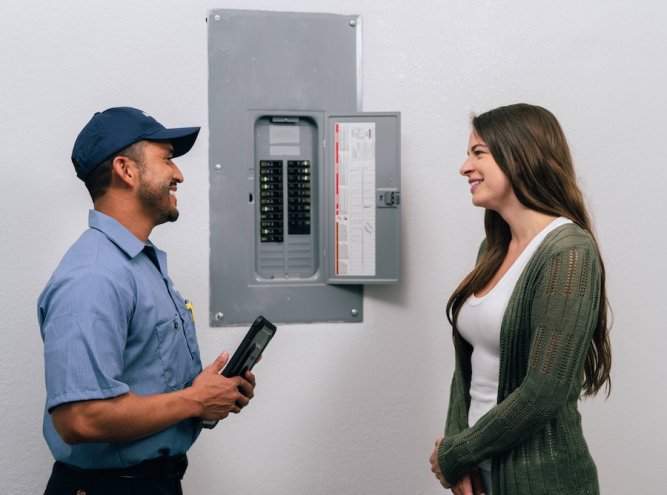
A burning smell near your electrical panel should stop you in your tracks. Mr. Electric serves local homeowners who…
Read More + Feb 15, 2026
Your homeowner's insurance policy has more fine print around electrical systems than most people bother to read. Outdated wiring, unpermitted work, and code…
Read More + Feb 05, 2026
When you bring home a new appliance it seems simple to set it up, until someone brings up the electrical panel and reality…
Read More +.webp) Feb 02, 2026
Feb 02, 2026
Imagine what life would be like if you could adjust your thermostat, dim the lights, and check who's at the front door, all…
Read More +