
Call this Wednesday to Get 10% OFF (Maximum $100 Off)
Call this Wednesday to Get 10% OFF (Maximum $100 Off)
24-Hour Emergency Electricians in Greer
Call this Wednesday to Get 10% OFF (Maximum $100 Off)
Call this Wednesday to Get 10% OFF (Maximum $100 Off)
24-Hour Emergency Electricians in Greer

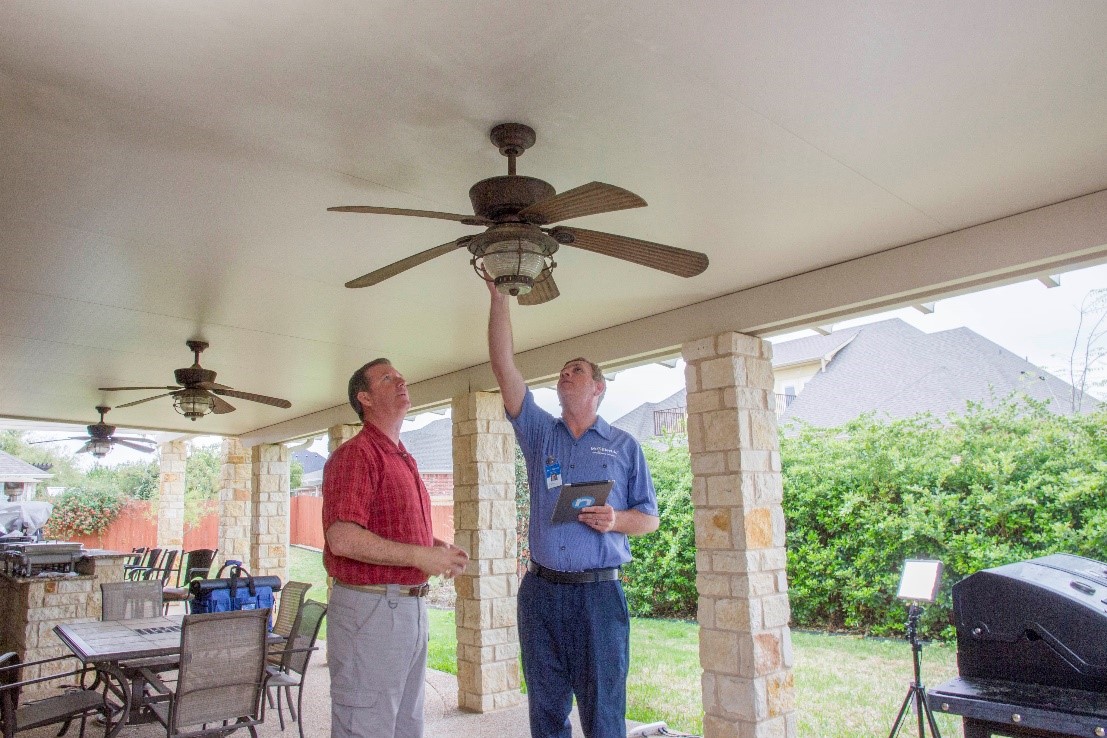
Ceiling fans all look pretty similar hanging in the store, so it's tempting to just grab the cheapest one and call it a day. But the difference between a budget fan and a well-made one is wobbly blades, a motor that hums loud enough to hear from the next room, or a pull chain that breaks within the first year. At Mr. Electric, we've installed enough of both to know that investing in a quality ceiling fan saves you money and frustration. The upfront cost stings less when you're not replacing it in three years or paying higher energy bills because it barely moves air. Here's what makes a ceiling fan worth the money.
The motor determines everything about how long your ceiling fan will last and how well it performs during its lifespan. Budget fans normally use AC motors with thinner copper windings and lower-quality bearings. These components generate more heat, wear down faster, and start making noise within the first couple of years. Quality fans use DC motors instead. DC motors have more advanced electronics that regulate speed and generate less friction during operation. A DC motor runs quieter, uses up to 70 percent less electricity than a comparable AC motor, and can last 15 to 20 years with minimal maintenance. AC motors in cheap fans give out around the five-year mark, and the repair costs at that point make ceiling fan replacement the more sensible option. The motor housing also matters. Diecast zinc or steel housings dissipate heat better than the plastic housings found in bargain models. Heat buildup accelerates bearing wear, which creates wobble and noise. When a homeowner buys a $50 fan, within three years, they're usually calling electricians for a new installation or electrical service.
Blade pitch refers to the angle of the blades relative to the horizontal plane. This single specification controls how much air the fan moves with each rotation. Most budget fans have a blade pitch between 8 and 10 degrees. At that shallow angle, the blades slice through the air without grabbing much of it. You can run the fan on high speed and still barely notice a breeze standing directly underneath it. Quality ceiling fans have blade pitches between 12 and 15 degrees. That steeper angle catches more air with each revolution and pushes it downward with greater force. The result is noticeable airflow at lower speeds, which means the motor works less and lasts longer. Blade material factors into performance as well. Cheap fans use thin composite materials that flex under rotation, which reduces the effective pitch because the blade twists away from its optimal angle at higher speeds. Solid wood or thick composite blades maintain their angle regardless of speed. The airflow difference between an 8-degree pitch and a 14-degree pitch can reach 40 percent or more. That gap determines whether your ceiling fan cools a room or just spins overhead as decoration.
The Energy Star certification on ceiling fans measures airflow efficiency in cubic feet per minute per watt. This rating tells you exactly how much air movement you get for each unit of electricity consumed. Fans without Energy Star certification typically deliver around 50 to 60 CFM per watt. Energy Star-certified models must deliver at least 75 CFM per watt at high speed and 155 CFM per watt at low speed. The best quality fans exceed 200 CFM per watt. These numbers can translate into serious savings on your utility bills. A ceiling fan running 8 hours daily for 120 days during summer uses a lot of electricity. An efficient fan might cost $8 to operate for that entire season, while an inefficient model costs $25 or more. The savings compound year after year. Over a decade, choosing an Energy Star fan over a budget model can save over $150 in electricity costs alone. That figure doesn't include the avoided costs of premature ceiling fan replacement or the reduced air conditioning usage that comes from effective airflow. Quality fans move enough air to let you raise your thermostat by four degrees, and that adjustment alone can cut cooling costs by 10 percent or more each summer.
Budget ceiling fans last about three to five years before something fails. The motor burns out, bearings wear down, or the pull chain mechanism breaks inside the housing. Wobbling develops as components loosen. The blades warp from humidity exposure because cheaper materials can't handle temperature swings. At that point, most homeowners face a choice between repairs and complete replacement. Repair parts for cheap fans rarely exist because manufacturers don't stock them. They design these units for disposal, not longevity. Electricians can sometimes source generic components, but the labor cost to install them usually exceeds the original purchase price of the fan. So you buy another budget fan and start the cycle over again. Each replacement means another afternoon waiting for an electrician, another trip to the store, and another box headed for the landfill. A $50 fan replaced every four years costs $250 over twenty years, plus four installation fees. Those installation fees can add up to $300 or more, depending on your area. A quality $200 fan installed once will run for twenty years and provide superior performance the entire time. You pay less overall and avoid the hassle of repeated replacements.
Investing in a quality ceiling fan makes financial sense when you calculate the true lifetime costs of ownership. Better motors, proper blade pitch, and genuine energy efficiency deliver comfort that budget fans can't match. When you're ready to upgrade, call Mr. Electric to schedule an appointment. Our electricians install ceiling fans correctly the first time with proper mounting and secure wiring.
 Feb 22, 2026
A burning smell near your electrical panel should stop you in your tracks. Mr. Electric serves local homeowners who…
Read More + Feb 15, 2026
Your homeowner's insurance policy has more fine print around electrical systems than most people bother to read. Outdated wiring, unpermitted work, and code…
Read More + Feb 05, 2026
When you bring home a new appliance it seems simple to set it up, until someone brings up the electrical panel and reality…
Read More +.webp) Feb 02, 2026
Feb 02, 2026
Imagine what life would be like if you could adjust your thermostat, dim the lights, and check who's at the front door, all…
Read More +